Japanese / 日本語
Update — 2026-08-20: Auto Snooze has landed as 自動再通知 and is now in the app. Thank you to everyone who reviewed. One question is still open — see below.
At a glance
Three Snooze-related terms in Due are being revisited in Japanese. The proposals aim to make the three terms read as clearly distinct from each other, and from Reminder / Repeat (which are already used elsewhere in the app).
| English | Currently | Proposed |
|---|---|---|
| Auto Snooze | 自動スヌーズ | 自動再通知 |
| Snooze | スヌーズ (Settings, editor) · 再通知 (notif button) | see question below |
| Notification Snooze | 通知スヌーズ | unchanged |
Skim the proposals, then jump to What I’d like to know for the questions — or read on for full context.
Due is a reminder/timer app that nudges you when a task is due. If you don’t react, Due can keep nudging every few minutes — that’s a feature called Auto Snooze.
Auto Snooze is separate from Repeat (the recurrence schedule, e.g. every Monday at 9 AM). A reminder can have both: “Pay school fees on the last day of every month” with Auto Snooze of 5 minutes. This means the reminder will fire monthly (Repeat), and if you don’t act, Due keeps nudging every 5 minutes (Auto Snooze) until you mark it done.
Due has existing translations for these terms for many years. However I’d like to revisit them to improve on their clarity.
In English, ‘Snooze’ is well understood in the context of an alarm clock where you temporarily stop the alarm and it’ll sound again about 10 minutes later. However, in many other languages, ‘Snooze’ can just mean a nap.
Due also uses the word ‘Snooze’ in three different contexts — Auto Snooze, Snooze, and Notification Snooze. They do different things, so we need three distinct Japanese words to distinguish them clearly.
Side-by-side
Auto Snooze and Snooze are being revisited in Japanese. Notification Snooze stays as 通知スヌーズ (see reference table).
| English in Due | Existing Translation | Proposed New Translation | What it does |
|---|---|---|---|
| Auto Snooze | 自動スヌーズ | 自動再通知 | The app keeps reminding you every few minutes until you respond |
| Snooze | スヌーズ (Settings, editor) · 再通知 (notification button) | see question below | The Snooze button in notifications, the Snooze Duration label in Settings → Prominent Alerts, and the editor toolbar’s ‘Snooze: 5 min’ subtitle |
Question: Snooze button — スヌーズ or 再通知?
Today the Snooze label is different in different places:
- Settings → Prominent Alerts → Snooze Duration uses スヌーズ
- Editor toolbar ‘Snooze: 5 min’ subtitle uses スヌーズ
- Notification action button uses 再通知
We’d like to unify these so all three places it shows up use the same Japanese word. The two candidates are:
- スヌーズ — Apple’s term across iOS (Clock, Reminders, Calendar). Familiar to iPhone users, but it’s a katakana loanword that doesn’t carry the function’s meaning (‘keep nudging’).
- 再通知 — literally ’notify again’. More descriptive of what the button actually does, but diverges from Apple’s standard.
Which would you pick, and why?
Other Japanese terms already used in Due (for reference)
These words are already used by the app to refer to various features. They must not be reused for the translations of Auto Snooze or Snooze. I am not planning on changing these terms. They are listed for your reference.
| English in Due | Japanese in Due | What it refers to |
|---|---|---|
| Reminder | リマインダー | The to-do items the user creates |
| Repeat | 繰り返し | Recurrence schedule (e.g. every Monday at 9 AM) |
| Notification Snooze | 通知スヌーズ | A Settings page where users configure which snooze durations are offered when snoozing a reminder from a notification |
Where each appears in the app
-
Auto Snooze
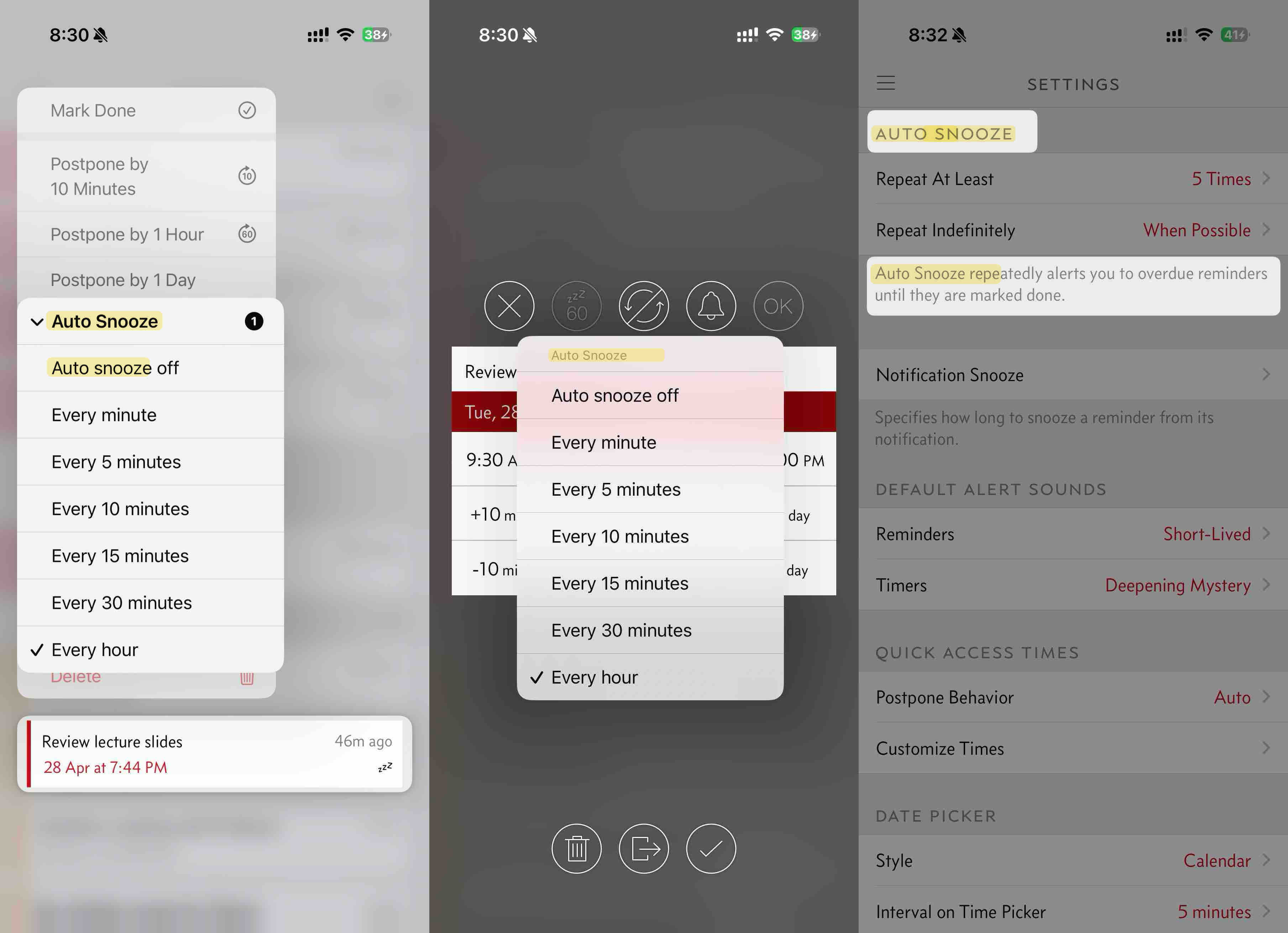
-
Snooze
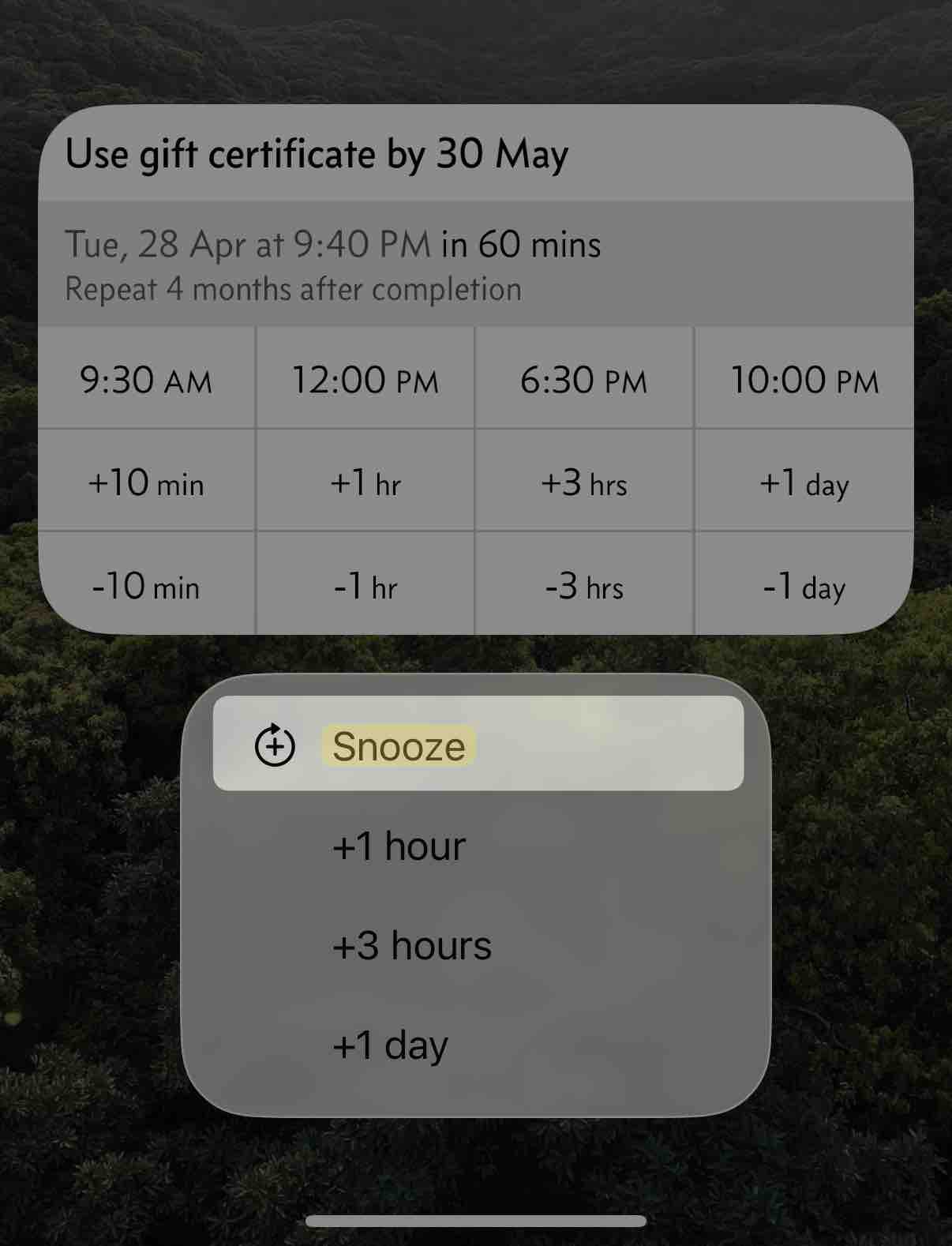
-
Notification Snooze
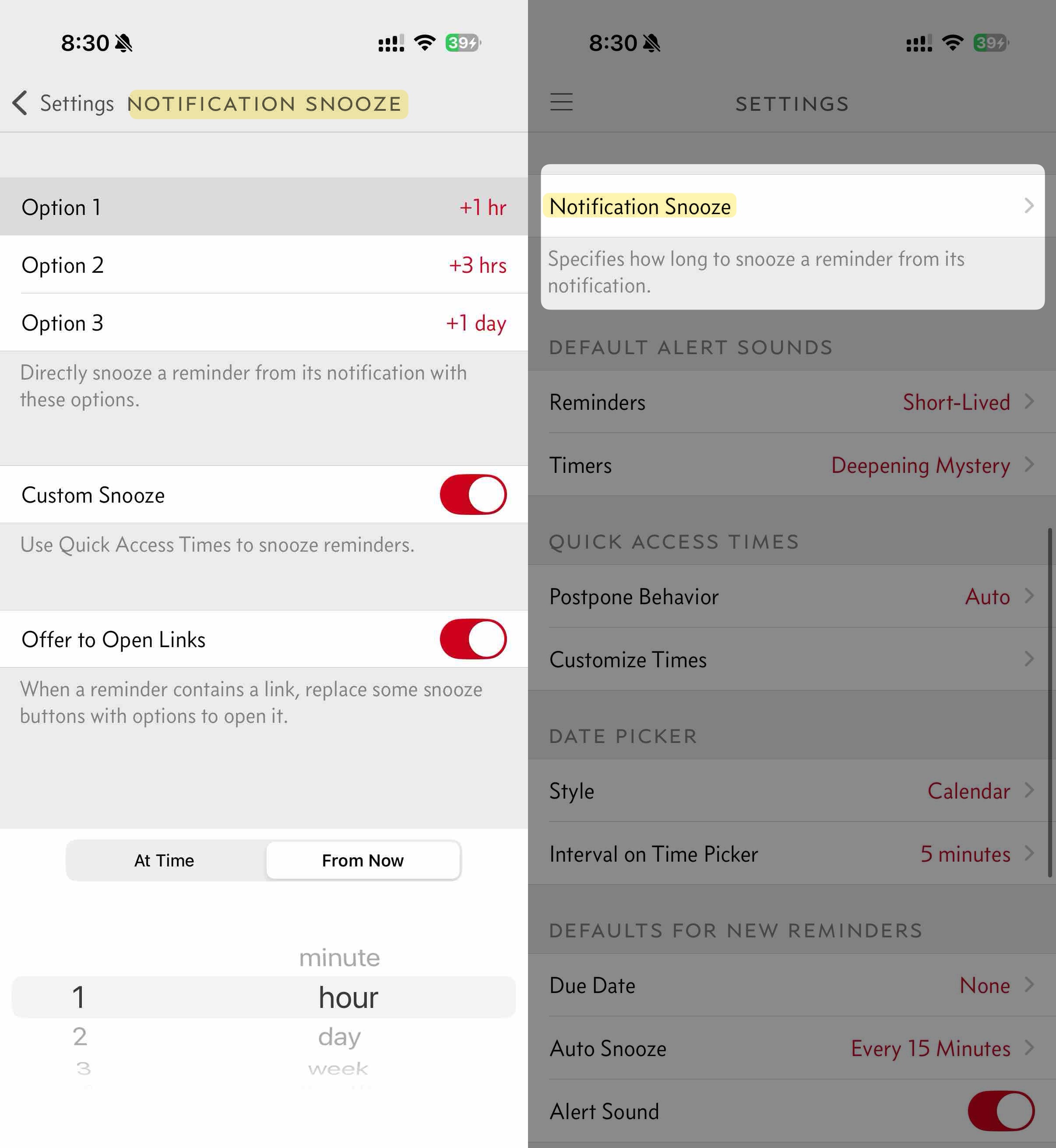
What I’d like to know
Auto Snooze is settled: it ships as 自動再通知, and Notification Snooze stays 通知スヌーズ. Neither needs any more input. One thing is still unresolved, and it is visible in the app today. The same action has two different names depending on where you meet it:
- the button on a notification says 再通知
- Settings → Snooze Duration says スヌーズ時間, and the editor subtitle says スヌーズ: I would like one word in all three places.
Try your words on the screens below, then answer whichever questions you have an opinion on — you do not need to answer all of them. When you are done, press the button and your email app opens with everything already written out.
Before the questions, try your words on the real screens. Type a word and it replaces the English, highlighted, so you can see how it sits in the app.
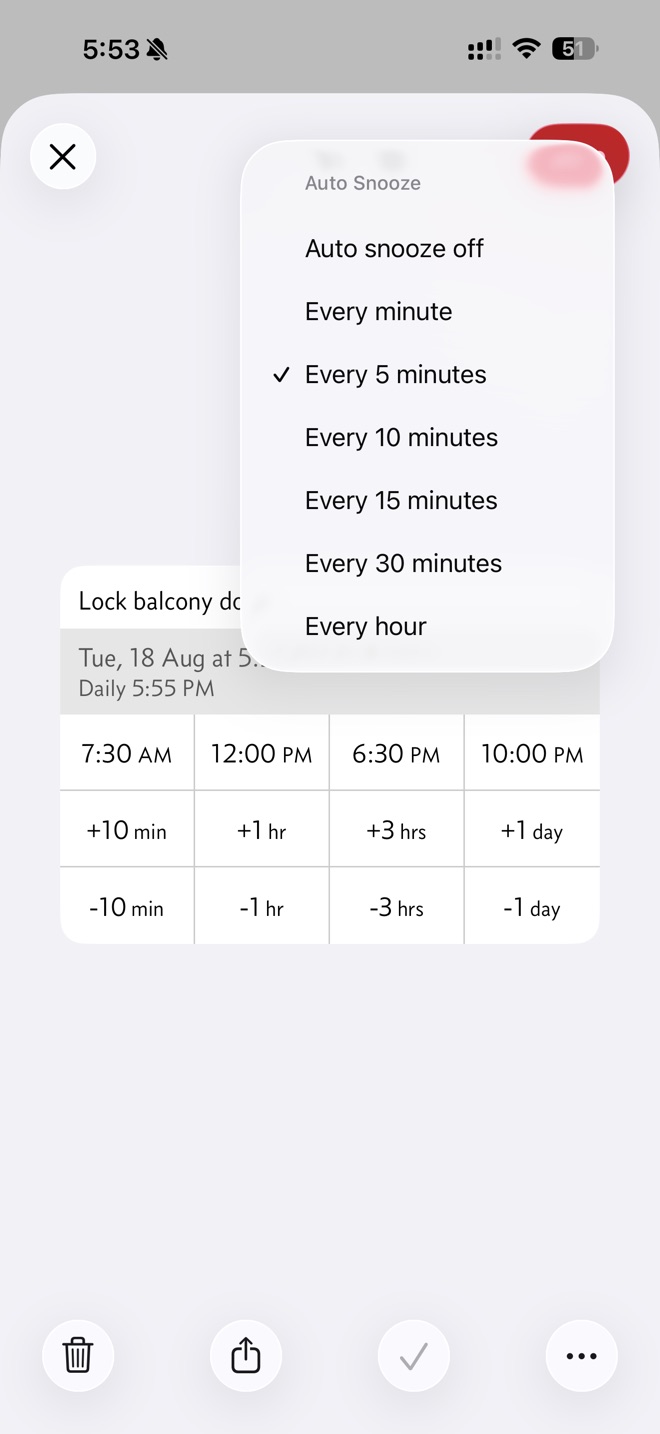
The menu that switches it on
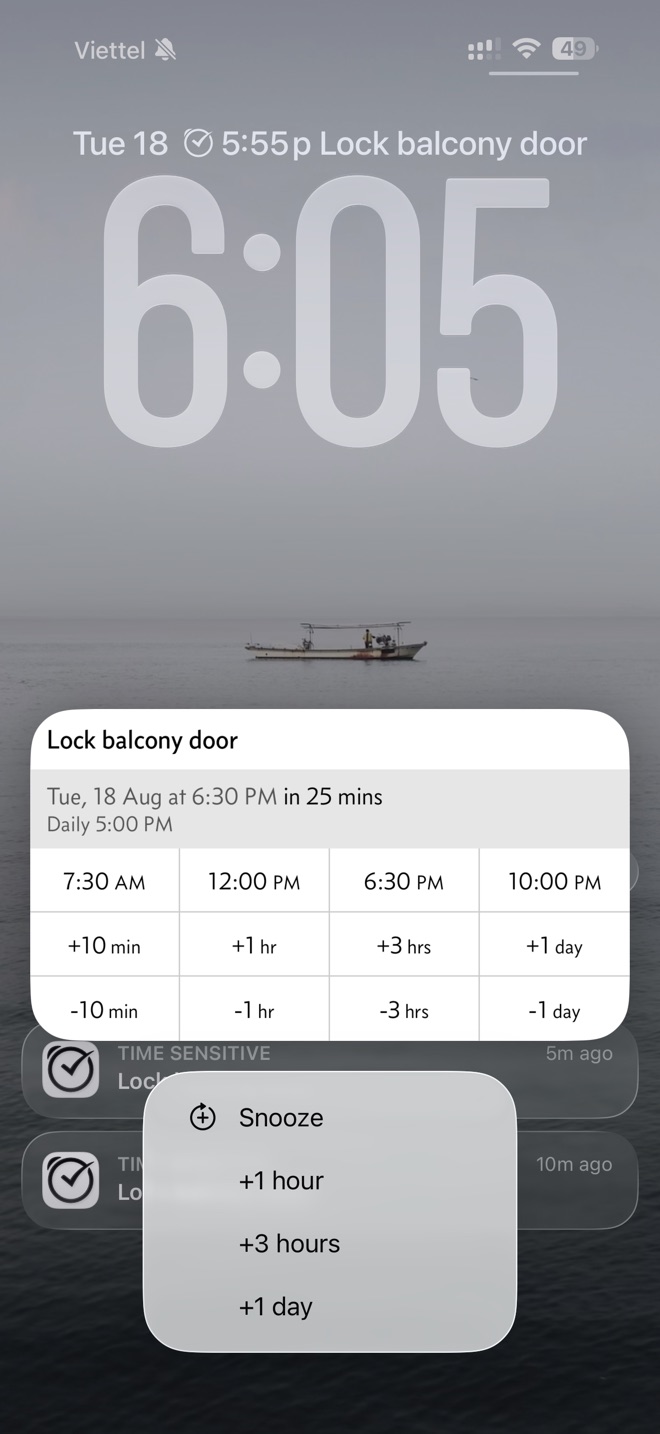
The action on the notification
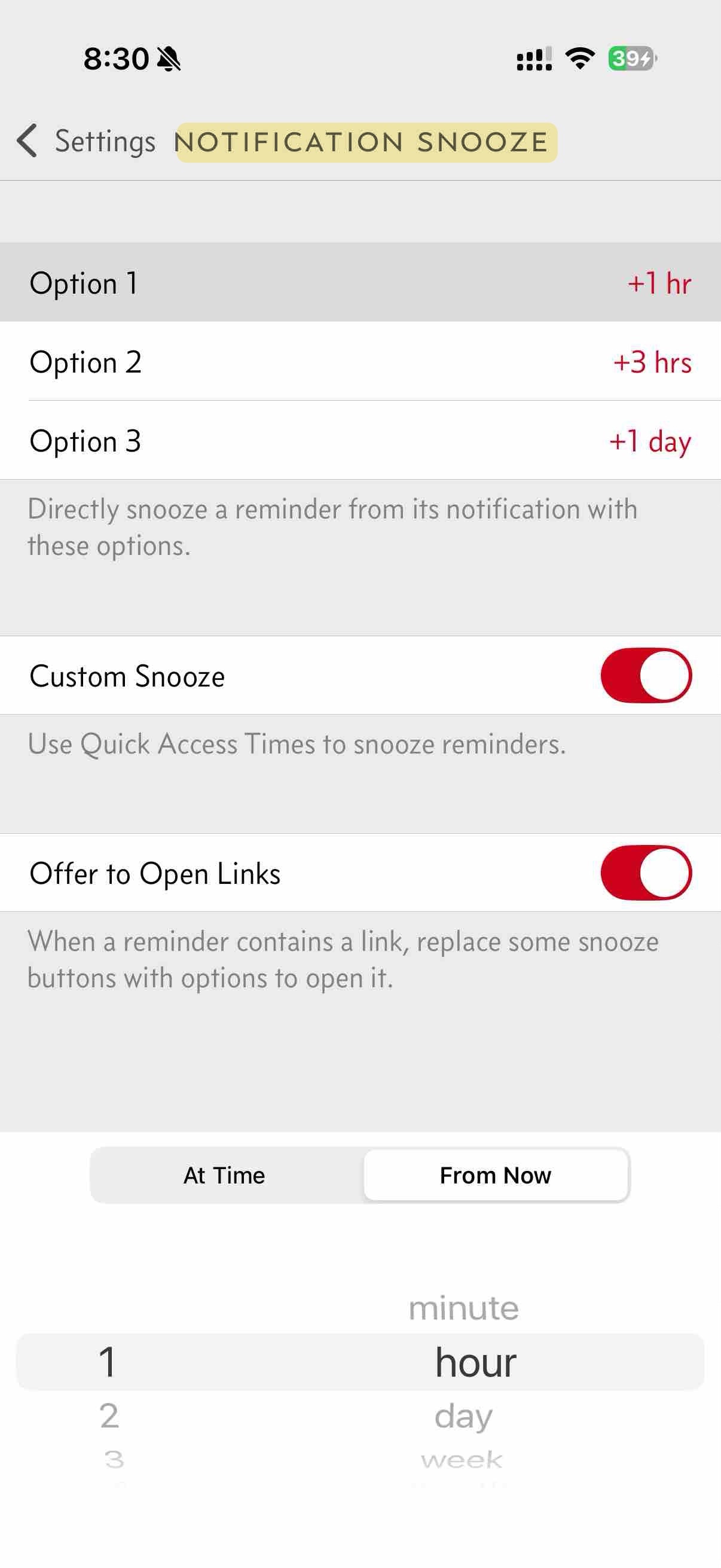
The Settings page title
is Apple's term across iOS (Clock, Reminders, Calendar), so iPhone users will recognise it — but it is a katakana loanword that does not carry the meaning. 再通知 literally means "notify again", which describes what the button does, but diverges from Apple. Which would you pick, and why? If neither, please do not reuse リマインダー, 繰り返し or 通知スヌーズ — those are other things in the app.
If a word is right but too long for a button, or you would use something different altogether, this is the place to say so.
Nothing is sent from this page. The button opens your own email app with your answers already written out, so you can read them before sending. If that does not work, use Copy my answers instead and paste them into an email to localization@dueapp.com.
Here’s a quick self-check that’s really useful: try translating the three steps below into Japanese using the proposed terms. The 5 terms (Reminder, Repeat, Auto Snooze, Snooze, Notification Snooze) should all read as clearly distinct, with no ambiguity between them. If the translation reads cleanly, the proposals are working. If you find yourself reaching for a different word to keep things clear, that’s a useful signal — please share what you reached for instead.
- Create a Reminder for 9 AM. Tap Repeat and choose Daily — Due reminds you at 9 AM every day.
- Turn on Auto Snooze at Every 5 Minutes — Due keeps alerting until you complete the reminder.
- When the reminder fires, you can also Snooze it from the notification (using the Notification Snooze durations from Settings).